Water infrastructure funding rewards utilities that plan ahead

Water infrastructure funding rewards utilities that plan ahead

Share this page:

U.S. drinking water, wastewater and stormwater utilities are working harder to keep critical projects moving as rising project costs, deferred maintenance, regulatory requirements and growing service demands are converging, often faster than utility revenues and outside funding can keep pace.  

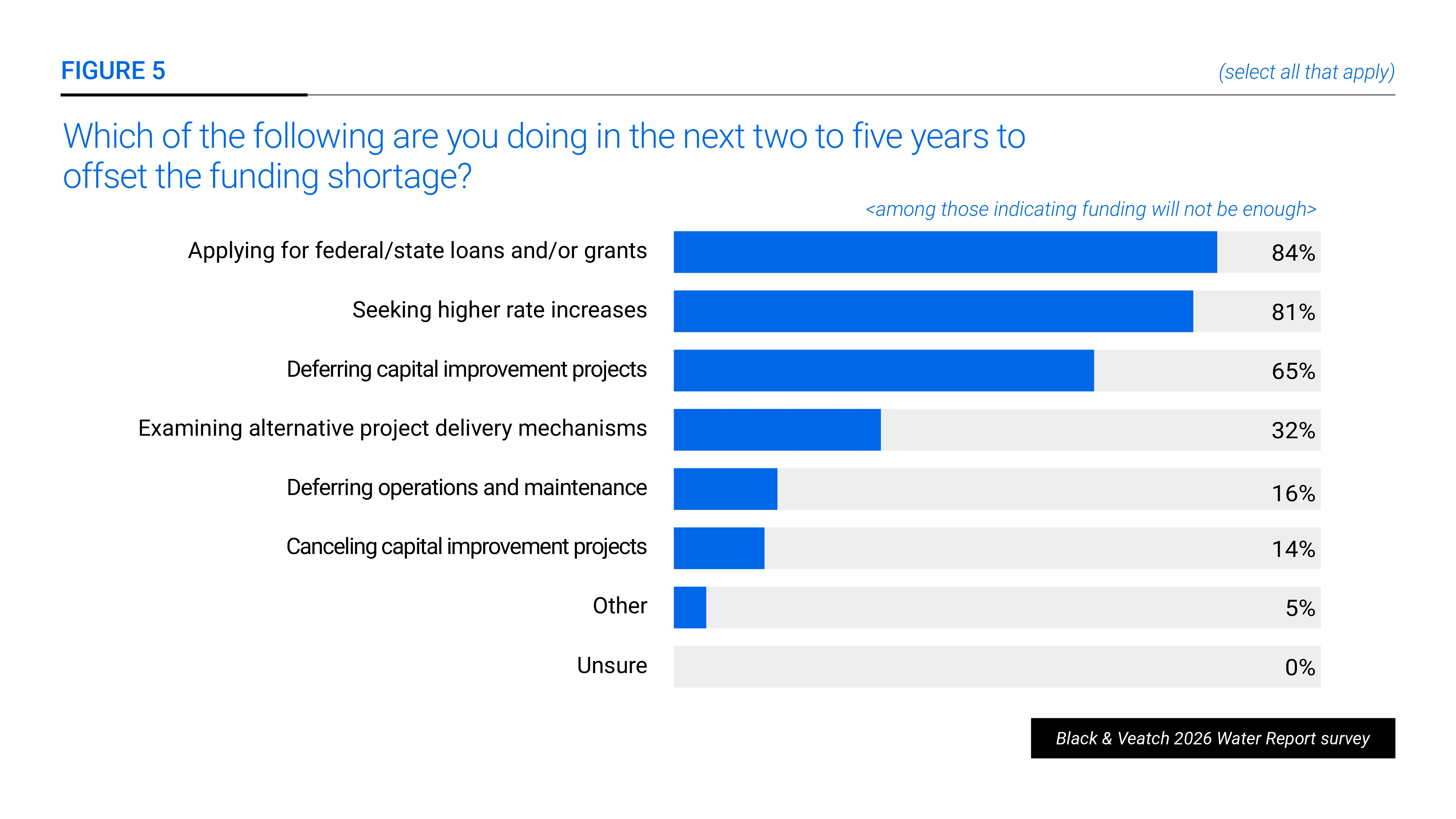
The Black & Veatch 2026 Water Report, based on a survey of more than 600 U.S. water sector stakeholders, found that 45% of respondents expect current funding to fall short of infrastructure needs over the next five to 10 years. Their response to the funding challenge includes pursuing grants and low-interest loans, increasing rates and delaying capital projects.  

The message is that funding can no longer follow project planning. Utilities need to align external funding, debt capacity, rates and capital priorities from the start and build the capacity to compete for diverse sources even before funding opportunities open. 

Water report chart

Water infrastructure financing: navigating and preparing is more critical than ever

State Revolving Funds (SRFs) have been a mainstay for financing many water and wastewater projects across the country. However, alongside municipal general obligation bonds, revenue bonds and EPA Water Infrastructure Finance and Innovation (WIFIA) loans, SRFs have seen a significant increase in rates. Moreover, many are oversubscribed, and this year marked the end of supplemental Infrastructure Investment and Jobs Act (IIJA) appropriations, which has given a significant boost to all SRF programs for the last five years.

Some positives have emerged over the last several months. Stalled and cancelled FEMA funding programs for pre- and post-disaster have opened or re-opened. U.S. Bureau of Reclamation opportunities, which were on hold for 18 months, are back on the table. The WIFIA program is well-funded and can issue loans upward of $800 million. Also, there are significant new state funding sources, such as funds from Proposition 4 in California and the Texas Water Fund, which provide billions of dollars for those states for water and wastewater projects in the coming years.

Some funding opportunities have rolling applications and long windows, but most do not. Most funding programs have firm application deadlines, sometimes following within weeks of the notice of opportunity. Being prepared in advance for these opportunities is essential.

One of the key hurdles to seeking external funding has been lack of staff capacity. Building the institutional capacity to compete for funding or outsourcing the expertise is a critical part of a funding plan. Compliance requirements, including Build America, Buy America, are another significant challenge for many utilities. A sound funding strategy includes understanding the compliance requirements, building them into procurement documents and following through with all federal and state requirements, through the life of the project.

Tracking and monitoring funding sources and layering external funding into the overall financing, rate and capital improvements plan is more critical than ever.

Water utility rates underpin every financing decision

Rate structure and rate setting strategies are changing. Some utilities are moving beyond routine inflation-based annual adjustments and tying revenue increases more closely to actual capital and operating needs. Where costs have risen quickly and/or rates have not historically recovered the full cost of service, even steady annual increases may fall short. A predictable multi-year rates strategy serves utilities and customers better than periodic catch-up increases.

Moreover, because of the lag in IIJA funding as it moved from the federal to state level, to the programs, and then to recipients, some of this funding is just now starting to be used, giving utilities a false sense of security of available funds and adequate rate support from ratepayers. As this money tapers off over the next couple of years, some utilities with a harsh reality of a lack of new funding available for future projects. While projects are still buoyed by IIJA funds and lower rate bond issuances and loans, now is the best time to start implementing routine increases to build financial resiliency.

A sound capital plan can still be reshaped by local priorities, customer demographics and public sentiment. Large or irregular increases intensify customer resistance, especially when the need for investment has not been communicated consistently. The task is to calculate the required revenue and funding needs and build an integrated multi-year financial roadmap that can win approval and stay workable over time.


Funding rewards utilities

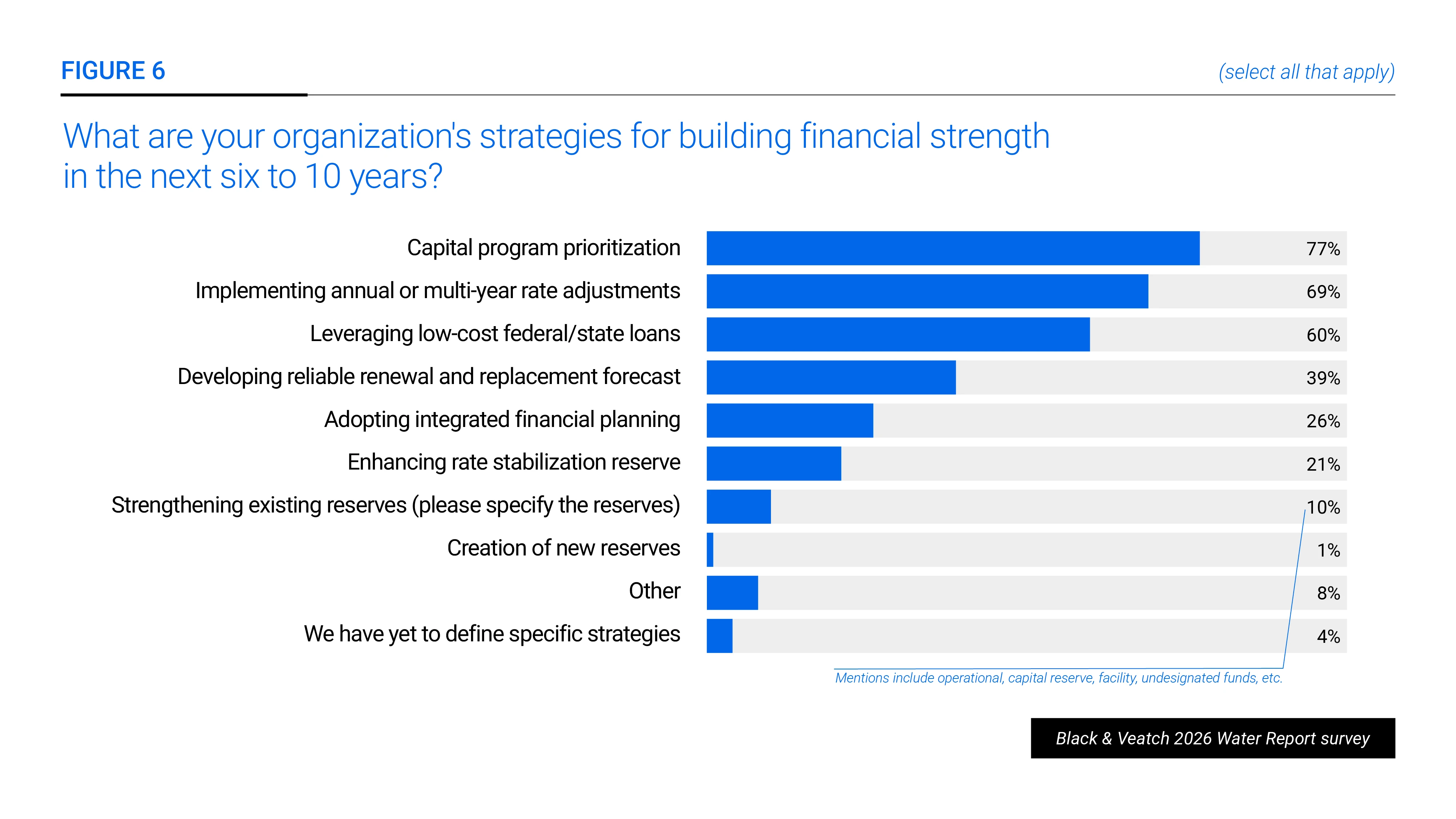
Capital prioritization aligns water project with financial capacity

Capital prioritization is becoming more central as utilities decide which projects address immediate regulatory or system risks, which create the most long-term value and which can be sequenced responsibly. Those judgments require a shared view of risk, lifecycle cost, revenue capacity and operational need, with finance, engineering and operations working together to build an integrated financial plan.

A longer planning horizon makes those choices more manageable. It lets utilities anticipate revenue requirements, phase capital work and reduce the likelihood of sudden financial shocks for the organization and its customers.

Apache Junction shows how readiness supports flood mitigation funding

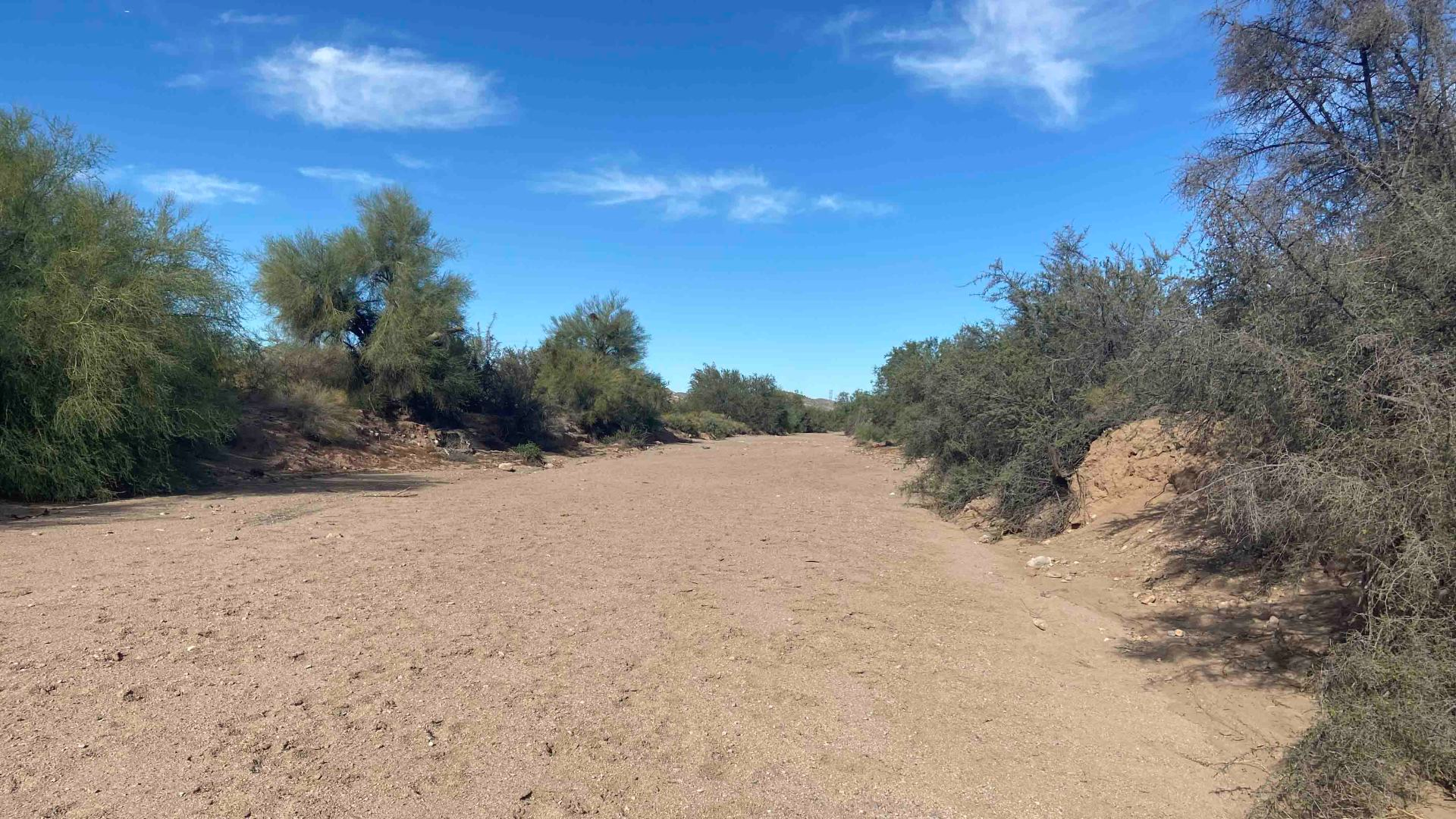
Weeks wash

The Weekes Wash Regional Multi-Use Detention Facility in Apache Junction, Arizona, shows what happens when funding strategy is built into project development. Chronic flooding threatened homes, infrastructure and public safety, but a proposed, approximately $90 million solution was beyond the community’s reach without substantial outside funding.

Years before applying for grants, Apache Junction and its partners completed hydraulic and hydrologic modeling, alternatives analysis, environmental evaluations and community engagement. That groundwork documented the project's risk reduction, public benefits and long-term value.

The city also pursued multiple Federal Emergency Management Agency (FEMA) funding pathways rather than relying on one application. It secured approximately $44 million in competitive FEMA funding, the agency's largest award in Arizona at the time and nearly half of the project's total cost.

The facility is designed to reduce the number of structures flooded during a 100-year storm by more than 99%. It also preserves ecological functions, supports groundwater recharge and provides recreational and educational amenities. Defining outcomes beyond a single infrastructure function gave the project a broader case to make. The lesson applies to any utility competing for outside dollars.

Ready before the next round opens

Utilities that align funding, rates and capital priorities early will make clearer tradeoffs. Those that build readiness with documented benefits, multiple funding pathways and compliance costs in view will be better positioned to win the outside dollars that keep critical work moving.

The key message is plan now.

For questions on funding programs and strategies, contact us.

Contact us

Looking for a partner in innovation?

Let's talk
2 construction workers at solar site